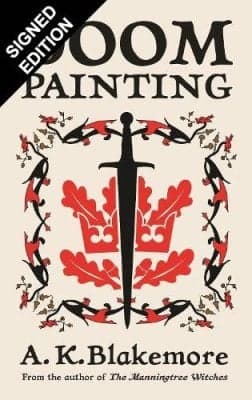
Doom Painting
by A. K. Blakemore· 2026
An immersive, lyrical retelling of the 1381 Peasants' Revolt told over sixteen days, this novel charts the path of a rebellion that continues to echo down the centuries.
It is 1381. England, reeling from the Black Death and years of conflict abroad, prepares for harvest. Two childhood friends ride into the town of Brentwood, Essex, where they come upon an altercation with a local Justice bent on squeezing more coin from the masses. Thus begins a rebellion of the commons—loyal to the king, but not to those landowners who press to curtail their freedoms; the multitude finding common cause against the powers that threaten their livelihoods.
Set over sixteen days, from Whitsuntide to Corpus Christi, Doom Painting roves across England as the men and women of the southern counties, supported by the visionary poet-priest John Ball, march to London to take their demands to the child King Richard II. Out of the revolt emerges its enigmatic and charismatic leader Wat Tyler, an opportunistic and mercurial rogue whose morality is birthed by the cause, and who shapes an identity for the English which has never been lost.
In the meeting of peasantry and nobility, new versions of England were born, and—for one bloody summer—the people of England seized control.
1 edition available
Editions
An immersive, lyrical retelling of the 1381 Peasants' Revolt told over sixteen days, this novel charts the path of a rebellion that continues to echo down the centuries. It is 1381. England, reeling from the Black Death and years of conflict abroad, prepares for harvest. Two childhood friends ride into the town of Brentwood, Essex, where they come upon an altercation with a local Justice bent on squeezing more coin from the masses. Thus begins a rebellion of the commons—loyal to the king, but not to those landowners who press to curtail their freedoms; the multitude finding common cause against the powers that threaten their livelihoods. Set over sixteen days, from Whitsuntide to Corpus Christi, Doom Painting roves across England as the men and women of the southern counties, supported by the visionary poet-priest John Ball, march to London to take their demands to the child King Richard II. Out of the revolt emerges its enigmatic and charismatic leader Wat Tyler, an opportunistic and mercurial rogue whose morality is birthed by the cause, and who shapes an identity for the English which has never been lost. In the meeting of peasantry and nobility, new versions of England were born, and—for one bloody summer—the people of England seized control.