Skip to book content
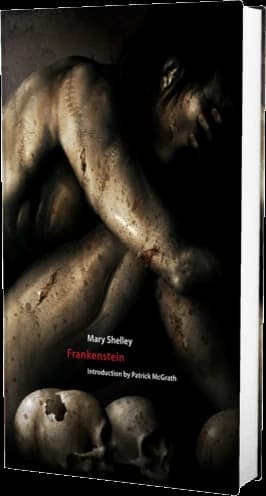
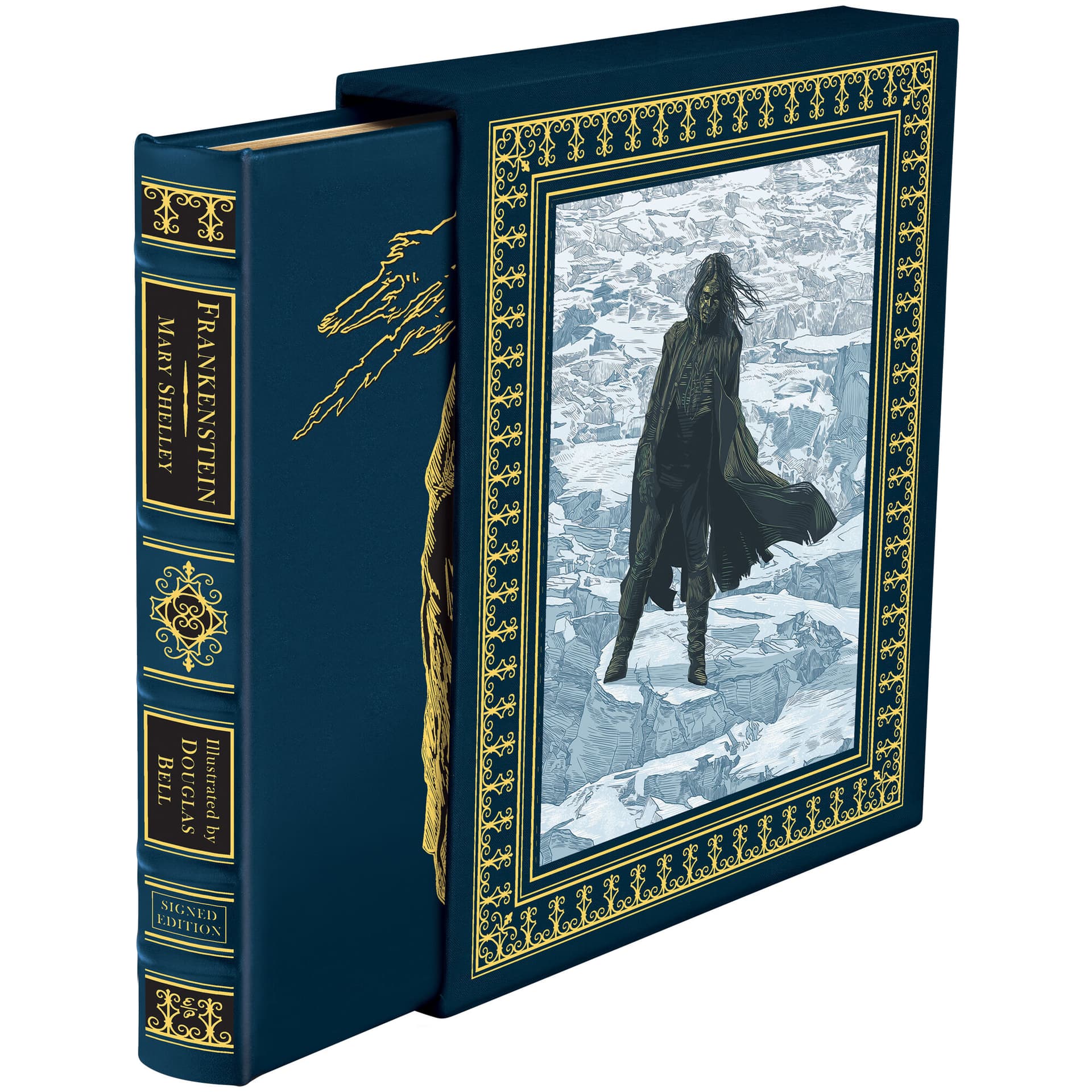
Cover of Frankenstein

Book

Frankenstein

by Mary Shelley, Mary Shelley and Bernie Wrightson

Victor Frankenstein is in over his head. He's away at college and talking to the wrong sort of professors. He's reading Paracelsus, Cornelius Agrippa, and Galvani: getting ideas about 'animal electricity.' When he's not hanging around charnel houses he's buried in books on occult arts. Now this obsession with some idea of a 'great object.' He does not consider that this object will become the Demon, the Creature, the Thing With No Name; that it will spawn the genre of science fiction, usurp Victor's last name as it's own, and eventually go on to star in hundreds of movies. Of more immediate concern to Victor should be that this creature is about to unleash a storm of personal catastrophe.

About this book

Victor Frankenstein is in over his head. He's away at college and talking to the wrong sort of professors. He's reading Paracelsus, Cornelius Agrippa, and Galvani: getting ideas about 'animal electricity.' When he's not hanging around charnel houses he's buried in books on occult arts. Now this obsession with some idea of a 'great object.' He does not consider that this object will become the Demon, the Creature, the Thing With No Name; that it will spawn the genre of science fiction, usurp Victor's last name as it's own, and eventually go on to star in hundreds of movies. Of more immediate concern to Victor should be that this creature is about to unleash a storm of personal catastrophe.

Mary Shelley was no stranger to personal catastrophe. By the time this book came out her mother had died of complications from childbirth, she'd been disowned by her father after eloping with married poet Percy Shelley, and lost a child of her own. Then came the famous trip to Lake Geneva where she, her sister, Percy, Lord Byron and John Polidori invented a ghost story contest that resulted in Byron and Polidori writing 'The Vampyre' (later to influence Bram Stoker) and where one stormy night the idea that would become Frankenstein: Or, The Modern Prometheus came to eighteen-year-old Mary Shelley in a dream.

What gives the book continued relevance is the merging of the author's personal pathos with Gothic horror and what were then new scientific studies on electrical current animating dead stuff. The Rime of the Ancient Mariner and Paradise Lost are obvious touchstones, but when Victor abandons his undergraduate study of mathematics due to an intense fascination in chemical sciences, aka the dark arts, it is Shelley's unique combination that unlocks not only an entire genre, but a series of themes whose cultural significance is still unfolding today.

A misunderstood soul in a damaged shell. Alienation. Otherness. This creature is an overgrown teen, animated, brought to life, and then abandoned. The most resonant portion of the story may be where the creature hides in a shed, watching a family, craving their acceptance, only to be greeted with fear and revulsion upon revealing his appearance. Victor's morbid compulsion for re-animating the dead begins as a misplaced hope to unlock the secrets of life. But his new life-form, at first an object of pity for the reader, soon transforms to a vengeful spirit of death. Victor's quest is Promethean, of course. But also eerily similar to our current age of cloning, genetic animal engineering, and what may turn out to be frightening developments in artificial intelligence.

The creature of this novel is indeed intelligent. This is the main feature separating it from it's most famous rendering: Boris Karloff's monster in the 1931 James Whale film. That, and long black hair. And the ability to jump down mountainsides at high speed. Actually, there is not much similarity between the film and book in either Victor or his creation. Where Shelley's creature develops an articulate and complex personality, her descriptions of it's appearance are somewhat rudimentary. We know it's big, has the hair, yellow eyes and a decayed face. Her original creature is more phantom than hulking beast. He appears and disappears mysteriously, intentionally playing off Victor's worst fears and weakness. Victor is not a mad scientist sending a soulless body toward the sky on a platform to be blasted by lightning; there is no exact description of the moment of creation.

But as the story teaches, maybe it's just as well that creative origins remain a mystery. This is an elemental novel. It begins and ends in ice, as visions of fire burn throughout.

In the catalog
Editions tracked
1
Producer
Centipede Press
In stock now
0 of 1

Editions

1 tracked
Editions
SOLD OUT
SOLD OUT edition cover
SOLD OUTCentipede Press
Smidgen PressHardcover2024-12ISBN 9781613473580
SlipcaseCloth BoundHeadbandsRibbon MarkerColor IllustrationsB&W IllustrationsArt SectionIllustrated EndpapersFoiled Signature
Other: Stephen KingIllustrator: Bernie WrightsonOther: George BeahmOther: Lillian HochwenderIllustrator: Vaughn Bode

Victor Frankenstein is in over his head. He's away at college and talking to the wrong sort of professors. He's reading Paracelsus, Cornelius Agrippa, and Galvani: getting ideas about 'animal electricity.' When he's not hanging around charnel houses he's buried in books on occult arts. Now this obsession with some idea of a 'great object.' He does not consider that this object will become the Demon, the Creature, the Thing With No Name; that it will spawn the genre of science fiction, usurp Victor's last name as it's own, and eventually go on to star in hundreds of movies. Of more immediate concern to Victor should be that this creature is about to unleash a storm of personal catastrophe. Mary Shelley was no stranger to personal catastrophe. By the time this book came out her mother had died of complications from childbirth, she'd been disowned by her father after eloping with married poet Percy Shelley, and lost a child of her own. Then came the famous trip to Lake Geneva where she, her sister, Percy, Lord Byron and John Polidori invented a ghost story contest that resulted in Byron and Polidori writing 'The Vampyre' (later to influence Bram Stoker) and where one stormy night the idea that would become Frankenstein: Or, The Modern Prometheus came to eighteen-year-old Mary Shelley in a dream. What gives the book continued relevance is the merging of the author's personal pathos with Gothic horror and what were then new scientific studies on electrical current animating dead stuff. The Rime of the Ancient Mariner and Paradise Lost are obvious touchstones, but when Victor abandons his undergraduate study of mathematics due to an intense fascination in chemical sciences, aka the dark arts, it is Shelley's unique combination that unlocks not only an entire genre, but a series of themes whose cultural significance is still unfolding today. A misunderstood soul in a damaged shell. Alienation. Otherness. This creature is an overgrown teen, animated, brought to life, and then abandoned. The most resonant portion of the story may be where the creature hides in a shed, watching a family, craving their acceptance, only to be greeted with fear and revulsion upon revealing his appearance. Victor's morbid compulsion for re-animating the dead begins as a misplaced hope to unlock the secrets of life. But his new life-form, at first an object of pity for the reader, soon transforms to a vengeful spirit of death. Victor's quest is Promethean, of course. But also eerily similar to our current age of cloning, genetic animal engineering, and what may turn out to be frightening developments in artificial intelligence. The creature of this novel is indeed intelligent. This is the main feature separating it from it's most famous rendering: Boris Karloff's monster in the 1931 James Whale film. That, and long black hair. And the ability to jump down mountainsides at high speed. Actually, there is not much similarity between the film and book in either Victor or his creation. Where Shelley's creature develops an articulate and complex personality, her descriptions of it's appearance are somewhat rudimentary. We know it's big, has the hair, yellow eyes and a decayed face. Her original creature is more phantom than hulking beast. He appears and disappears mysteriously, intentionally playing off Victor's worst fears and weakness. Victor is not a mad scientist sending a soulless body toward the sky on a platform to be blasted by lightning; there is no exact description of the moment of creation. But as the story teaches, maybe it's just as well that creative origins remain a mystery. This is an elemental novel. It begins and ends in ice, as visions of fire burn throughout.

Where to buy
Centipede Press
Sold Out
—Sold Out

Second-Hand Market

No second-hand copies on eBay right now.

Related books

Related books
← Back to catalog