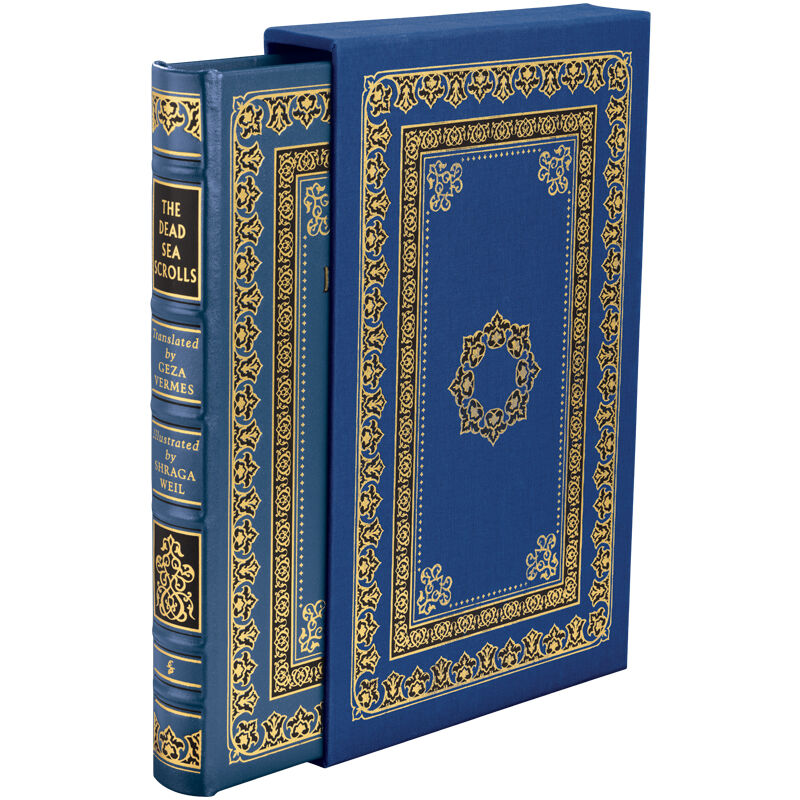
Exploring caves near the Dead Sea in November 1946, Bedouin shepherd Muhammed edh-Dhib discovered an ancient urn containing manuscripts. It would prove one of the greatest archaeological finds of all time. Over the next decade almost a thousand biblical and sectarian texts, many only fragments, would be discovered in the Judean caves of Qumran, texts which have transformed the understanding of the Hebrew Bible, early Judaism, and the origins of Christianity. The oldest group of Old Testament manuscripts ever found, the Dead Sea Scrolls include at least fragments of all but one book of the Hebrew scriptures, many in versions surprisingly different from the standard texts. The scrolls also preserve books not included in the canonical Bible, as well as non-scriptural writings that document the dramatic diversity and dynamism of Judaism and early Christianity. The translation of the scrolls is by Geza Vermes, a scholar of the Dead Sea scrolls and their era. Vermes also provides an introduction and commentary that illuminate the ancient texts, their authors, and the religious turbulence in Palestine during the centuries just before and after Christ.
Where to buy